Planning a Winter-Ready Living Room Update in Calgary
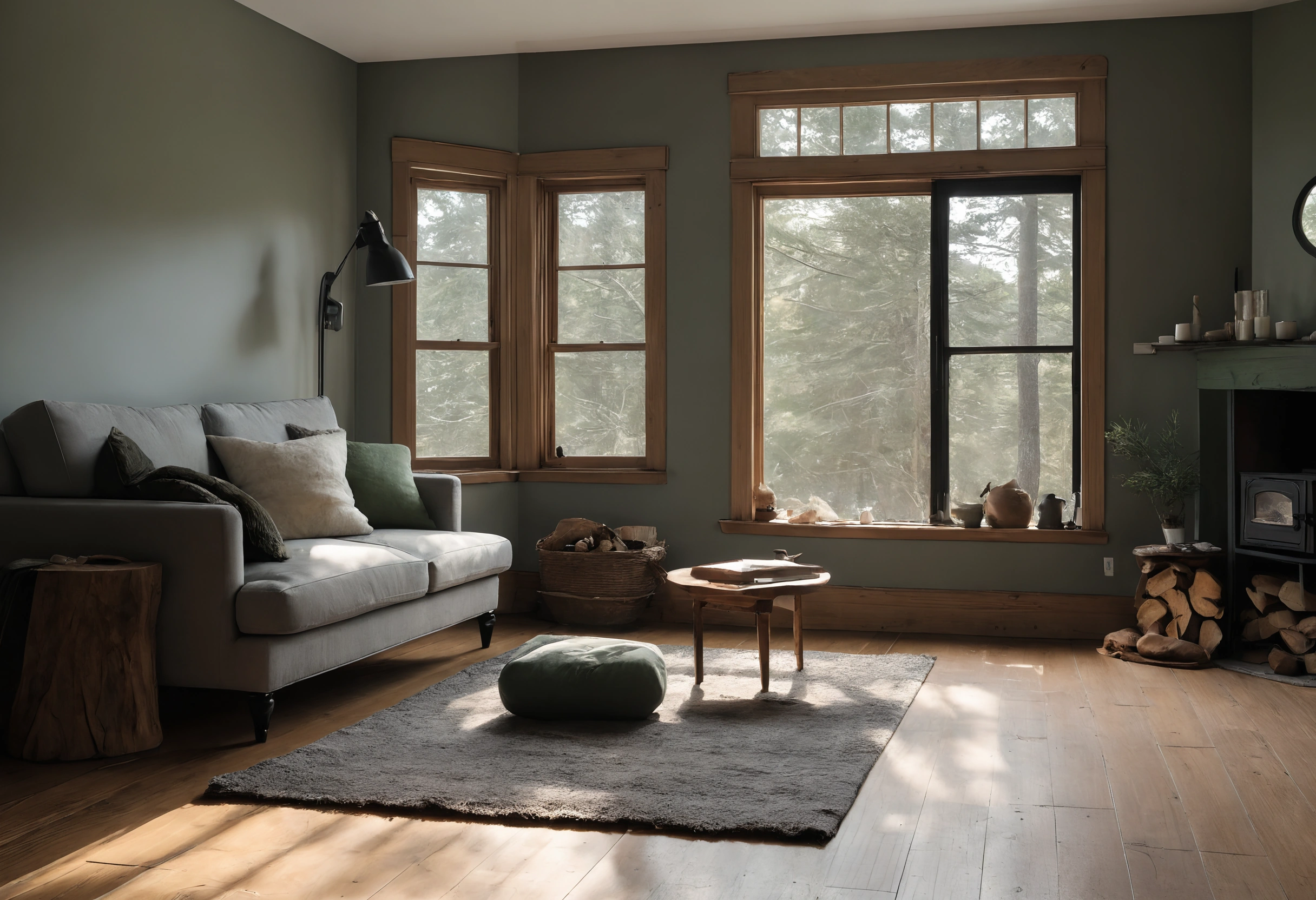
A Calgary living room has to cope with three winter problems: cold glass, dry air and low light. Settle those before choosing a sofa or a rug and the rest of the room falls into place. Antonovich Group, an interior architect practice headquartered in Dubai, runs architecture, interiors and fit-out as one team, with 20+ years of practice, 500+ projects delivered and ISO 9001 certification. Gioia Interiors applies the same one-plan discipline to a single Calgary room through design consultations and space planning.
- Choose windows with the ENERGY STAR Canada label before you order any furniture or custom millwork around them.
- Run a humidifier from the first cold week and keep solid-wood pieces away from fireplaces, baseboard heaters and heat vents.
- Fit cellular shades close to the glass and lower them every night.
- Place the sofa, rug and wood tables out of direct sun, and use curtains or blinds to shade them.
How cold does a Calgary living room get in winter?
Environment and Climate Change Canada normals for Calgary International Airport show how steep the drop is from autumn into midwinter. The average January night is more than eleven degrees colder than the October one, and heating demand climbs with it. A room furnished in October has to work in January weather, not in the weather outside today.
Cold glass is what people feel first. A seat beside an old window is uncomfortable long before the room itself is cold, so the layout, the rug and the window treatment all start with the glazing.
| Decision | Figure or rule |
|---|---|
| Mean daily minimum, October | -1.4 °C |
| Mean daily minimum, January | -13.2 °C |
| January days with a minimum below -10 °C | 17.7 |
| Heating degree-days at a base of 18 °C, October | 398 |
| Heating degree-days at a base of 18 °C, January | 778 |
| Window U-factor, ENERGY STAR Canada Version 5.0 | At most 1.22 W/m²·K, or an Energy Rating of at least 34 |
| Window air leakage, ENERGY STAR Canada Version 5.0 | At most 1.5 L/s/m² |
| Placing wood furniture | Not next to fireplaces or baseboard heaters, not over heat vents |
| Placing furniture in sun | Out of direct sunlight, with blinds or curtains to limit it |
Which window label should a Calgary homeowner ask for?
Natural Resources Canada publishes the ENERGY STAR Canada specification for windows, doors and skylights as a voluntary national label. Version 5.0 took effect on 1 January 2020 and sets both a thermal limit and an air leakage limit. Ask the supplier for the label before you approve shop drawings or order millwork around the openings.
The two limits do different jobs. The U-factor or Energy Rating describes how much heat passes through the glass and frame. The air leakage limit describes drafts through the assembly. A window that meets both is the baseline against which every quote can be compared, and it is the point where a living room stops losing comfort at the wall.
What do window coverings add on winter nights?
The U.S. Department of Energy reports that cellular shades trap air in their honeycomb cells and between the shade and the window, which helps most in colder climates. In an Oak Ridge test home in Knoxville, Tennessee, they saved up to 20 per cent of heating energy compared with no shades at all.
The same fact sheet notes that vinyl and metal blinds block some sun but give little insulation, and that cellular shades outperformed every other shading type in laboratory simulations. Fit matters as much as the product: a shade that sits close to the glass holds the trapped air against the cold surface. The fact sheet points buyers to the Attachments Energy Rating Council label, which rates a product for the buyer's climate zone. Lowering the shade at night and raising it on sunny afternoons gives the room both insulation and free light.
How dry will the air get, and what does that do to wood?
The Canadian Conservation Institute states that winter heating causes relative humidity to fall, and that in many areas of Canada, by December, indoor air can reach as low as 5 per cent when heating to 21 °C without humidifying. Wood responds to that: it can crack, split, delaminate or distort when the air around it dries out.
The U.S. Forest Products Laboratory advises installing wood at the moisture content it will see in service, which limits the seasonal swing and avoids floor buckling and cracks in furniture. For a new oak floor or a solid-wood table, that means a steady, humidified room before delivery, not after. The Conservation Institute also advises against placing wood furniture beside fireplaces or baseboard heaters, or over heat vents, which matters in a room with a wood-burning stove.
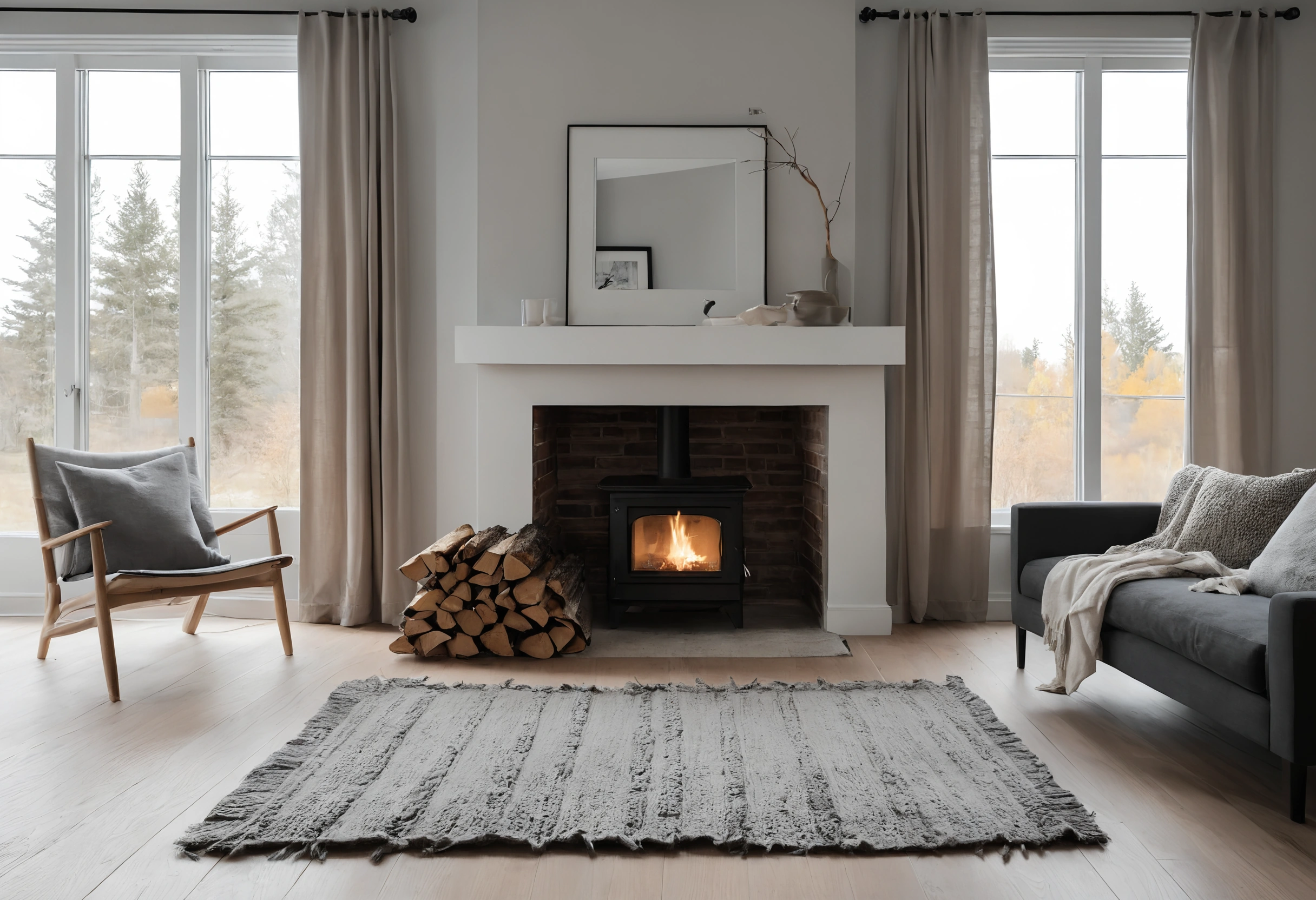
How should light guide fabric and finish choices?
Sofas, rugs and floors all sit in the light that comes through the window. The Canadian Conservation Institute describes dyes as highly light-sensitive and notes that daylight through window glass carries ultraviolet light of roughly 400 to 500 microwatts per lumen, against 75 or less when the glass has a good filter.
The Institute adds that window glass filters shortwave ultraviolet but not enough to protect sensitive materials, and that light damage to wood is cumulative: it can turn light woods dark and bleach dark woods. In practice, put the most colour-sensitive textiles and the best wood table out of the direct beam, and let curtains or blinds take the exposure.
In what order should the decisions be made?
Start with the envelope, because every other choice depends on it: windows first, then humidity control and the floor, then window treatments, then upholstery, rugs and lighting. A Calgary boutique interior design firm can hold these steps in one plan, covering furniture layouts, finish selections, lighting plans and custom window treatments.
The lead designer handles the finish selections, and custom window treatments follow the window decisions. Reviewing completed portfolio projects shows finished rooms, and the firm page describes how the studio works.